 Cup & Ratio
Perspectives
When is a coffee good enough to stop adjusting?
An enjoyable cup does not need to remain an unfinished project.

Perspective. An editorial reflection on preferences and everyday life. It does not report a survey or classify people by their tastes.
Before you start
An enjoyable cup does not need to remain an unfinished project. Measurements are useful when they support your goal, and your goal can include simply enjoying breakfast.
Define success before the next adjustment
Write down what you want from the cup in ordinary language. Perhaps it should be pleasant on its own, work with milk or fit a short morning routine. A clear goal prevents every new technique from becoming an obligation. You can be curious without treating the current cup as a failure.
Distinguish repeatability from perfection
A recipe that reliably produces something you enjoy has practical value even if it is not optimized against every metric. Measurement helps you return to that result. It does not require searching indefinitely for an invisible ideal that changes whenever you read another opinion.
Choose when to experiment
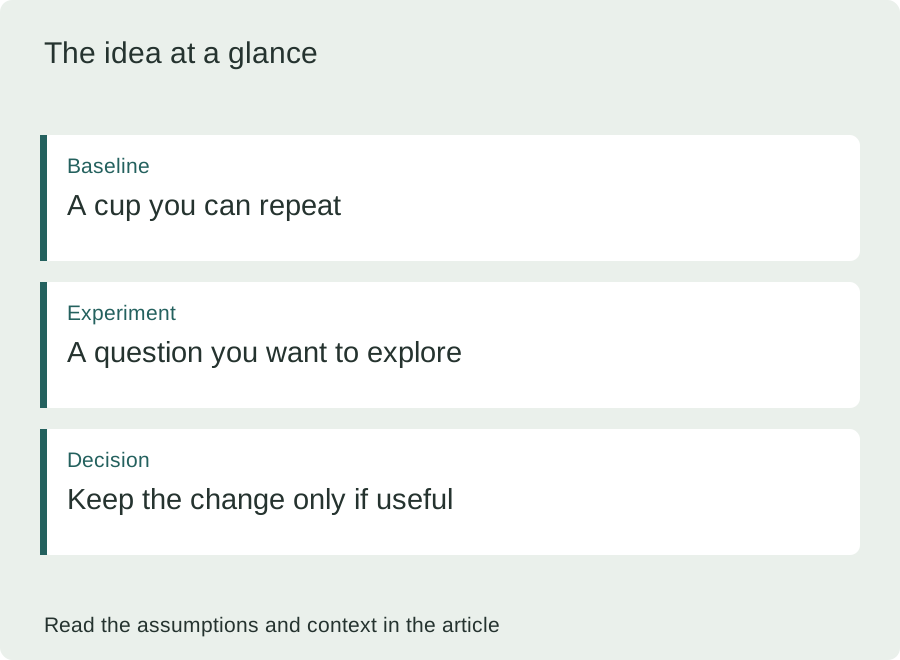
Set aside occasions for trying something new if experimentation is enjoyable. Keep a familiar recipe for times when it is not. This separates curiosity from pressure and makes comparisons easier. A change that adds work without a benefit you value is allowed to remain an experiment rather than becoming the new routine.
Keep one recipe outside the experiment
Choose a familiar recipe that you are happy to serve without further adjustment. Save its quantities and main steps somewhere easy to find. When curiosity strikes, make the experiment a separate note with a specific question. If the experiment disappoints, the baseline remains available; it has not been invalidated by the existence of another method. This division can make learning more enjoyable because ordinary coffee no longer has to carry the pressure of constant improvement. You can be both interested in the details and satisfied with the drink already in front of you.
Let your own preference count
Experts and creators can explain methods, but they do not experience your cup for you. Learn from them while keeping track of what you actually like. Being able to stop adjusting is not a rejection of knowledge; it can be the result of knowing which questions matter to you.
Practical check: what to observe
Use the questions below to consider your own preferences. This article is an editorial perspective, not a survey or a way to classify other people.
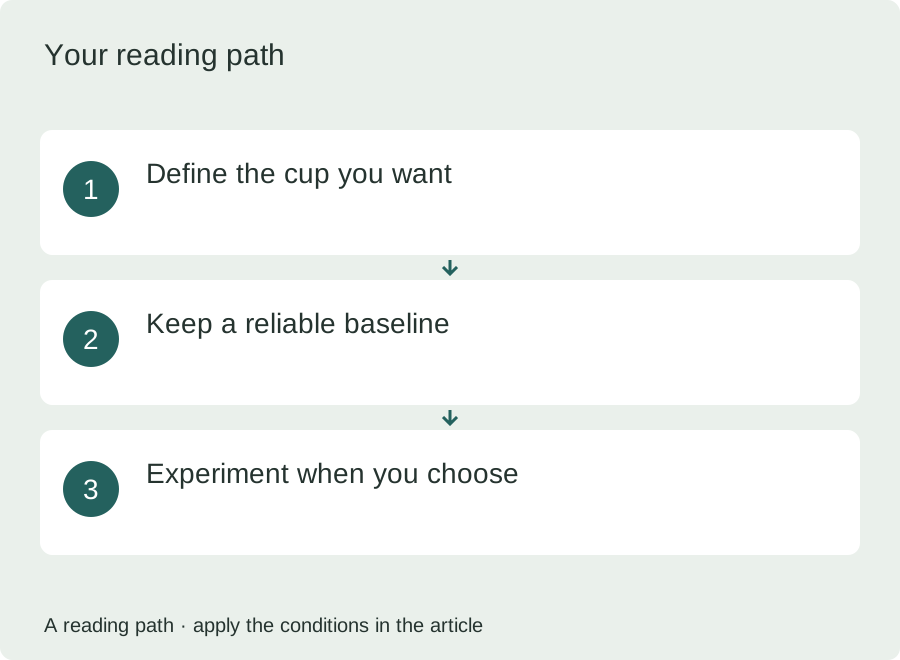
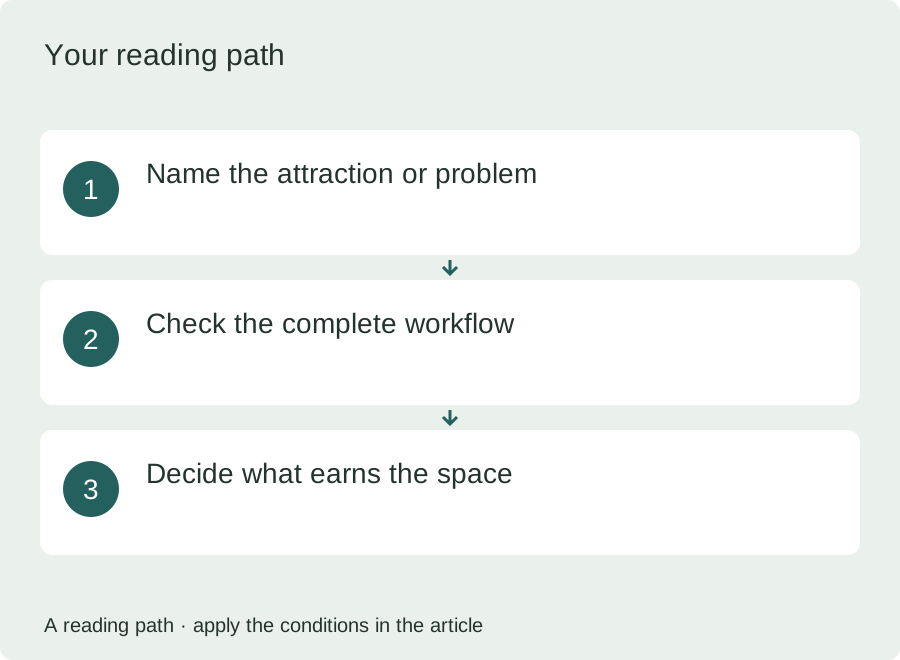
- Define the cup you want
- Keep a reliable baseline
- Experiment when you choose
Should I ignore all measurements once the coffee tastes good?
No. Keeping a useful recipe can help you repeat it. The point is to use measurements in service of enjoyment rather than treating every number as a demand for further optimization.
For more context, see the topic FAQ and glossary. A reference value or example should be read with its units, assumptions and product-specific conditions.
Sources and scope
This is original editorial commentary. Examples of preferences are illustrative, not findings from a survey or psychological study. Read the editorial policy for sourcing, AI assistance and corrections.
Put the explanation to work
Continue reading
Spot a questionable claim or a calculation issue? Read our correction process and contact information. Examples and illustrations are educational; they do not establish product suitability or a laboratory result.