In pictures
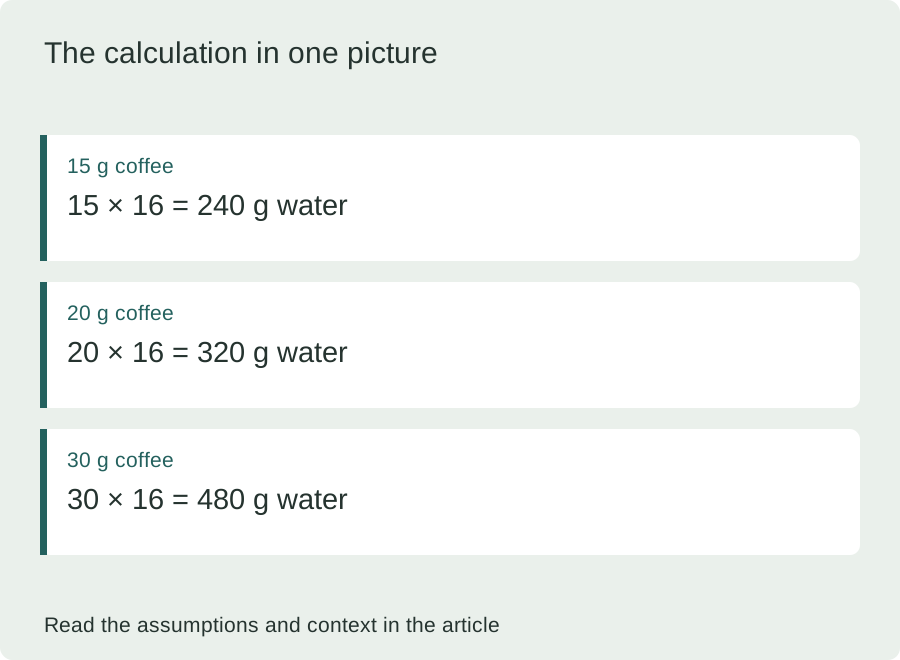
One chart makes coffee-to-water ratios easy to calculate
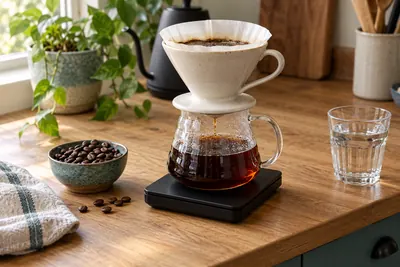
For a filter recipe written as 1:16 by mass, each gram of dry coffee corresponds to 16 grams of brewing water. Multiplication does the rest.
 Cup & Ratio
In pictures
For a filter recipe written as 1:16 by mass, each gram of dry coffee corresponds to 16 grams of brewing water. Multiplication does the rest.
Explainers
You do not need to memorize a flavor wheel before making a useful cup.
A grinder setting is a repeatable reference on your equipment.
Water belongs in both the recipe and the equipment-care plan.
In pictures
For a filter recipe written as 1:16 by mass, each gram of dry coffee corresponds to 16 grams of brewing water.
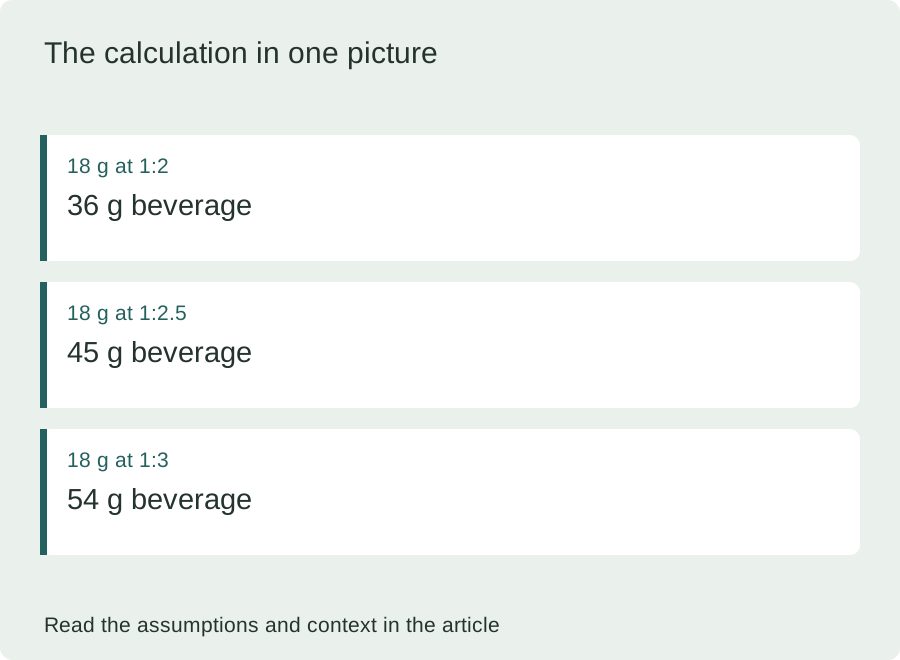
In the examples here, espresso ratio compares dry coffee dose with beverage mass in the cup.
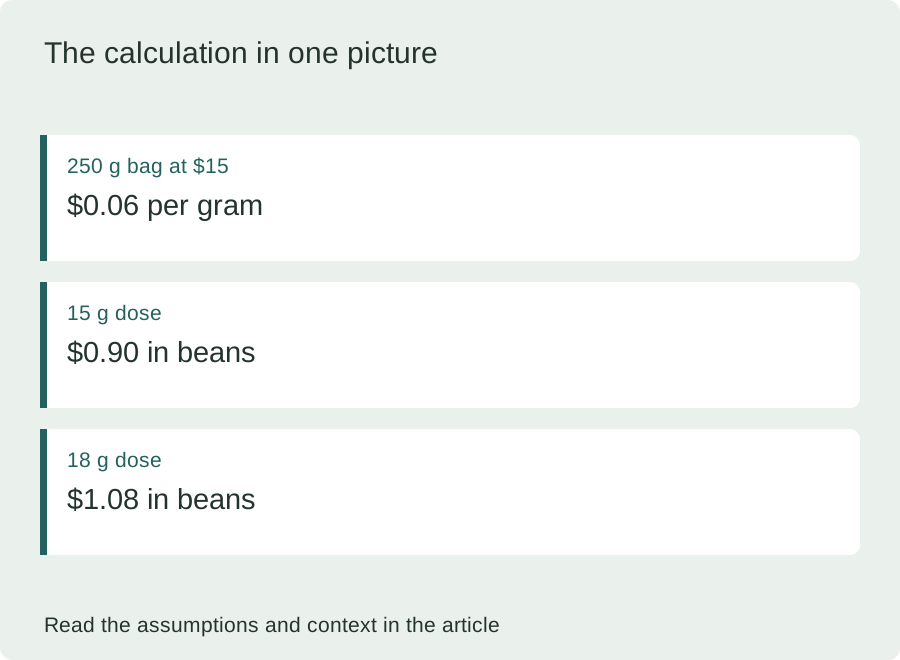
The price of a bag becomes easier to compare when you connect it to dose.
Perspectives
The appeal may be the pause as much as the drink: a few familiar actions that mark a transition from one part of the day to another.
A considered cup is not necessarily an elaborate cup.
Equipment can offer tactile pleasure, curiosity and the promise of a new capability.
Technical guides
A kettle setting does not equal the temperature throughout a coffee bed.
If 200 g of coffee measures 1.50% TDS, it contains an estimated 3 g of dissolved solids.
For a simple beverage-based calculation, 250 g of coffee at 1.20% TDS contains 3 g of dissolved coffee.
Use the explanation
Calculate beverage-based extraction and dilution, with the assumptions kept in view.
Explore hardness, alkalinity and grind references alongside equipment-specific limits.
Read the editorial standards, check a term in the glossary, or send a correction. Scene images are AI-generated illustrations; diagrams explain concepts and labeled examples.