 Cup & Ratio
The reading library
All articles & guides
30 reads about coffee brewing and water. Choose a question, a picture or a perspective.
Explainers
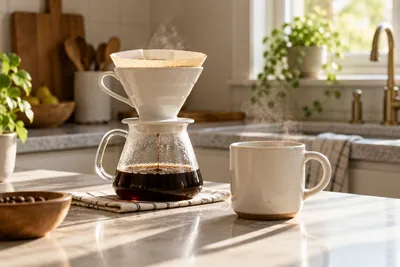
Coffee for beginners: the few ideas that make everything clearer
You do not need to memorize a flavor wheel before making a useful cup.
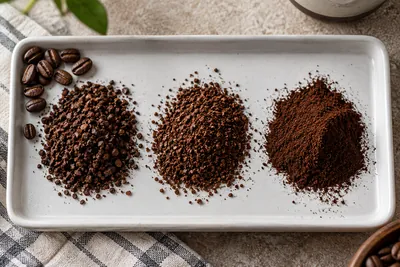
Why grind size matters more than the number on the dial
A grinder setting is a repeatable reference on your equipment.
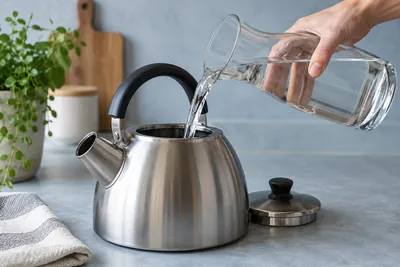
Why water matters even when the coffee is excellent
Water belongs in both the recipe and the equipment-care plan.
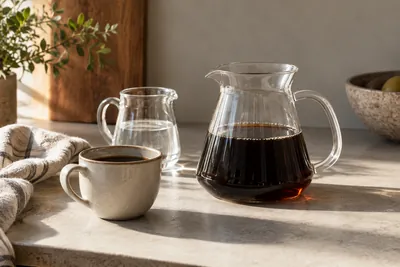
Strong, bitter or just concentrated? Why the difference matters
Strong is an ambiguous tasting note.
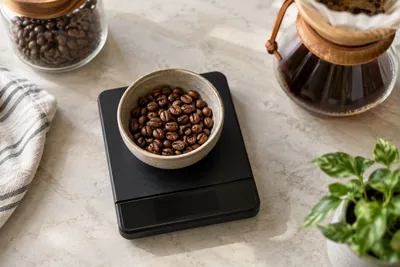
Why a coffee scale can matter more than another accessory
A scale makes the quantities in a recipe visible.

The five-line coffee journal that makes your next cup easier
A useful brew note records enough to repeat or change the cup.
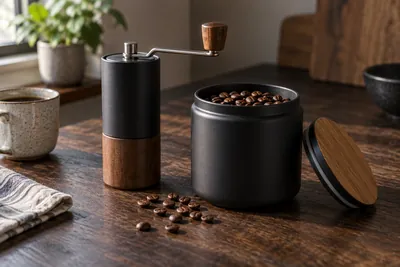
Why someone else’s grinder setting rarely tells the whole story
A setting shared online is missing context unless it identifies the grinder, calibration, coffee and method.
Coffee storage: the questions to ask before buying another container
A storage container should solve a specific problem in your routine.
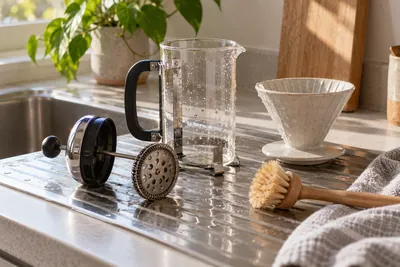
Pour-over or immersion? Choose the routine you want to repeat
The choice is about more than equipment appearance.
Why cleaning belongs in the coffee recipe conversation
A recipe assumes equipment that is ready to use.
In pictures
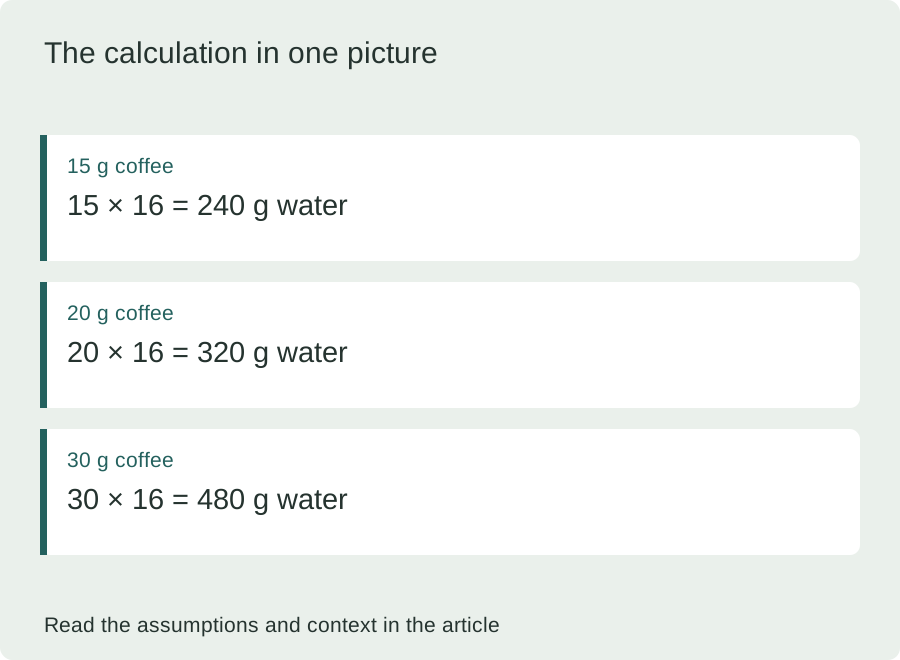
One chart makes coffee-to-water ratios easy to calculate
For a filter recipe written as 1:16 by mass, each gram of dry coffee corresponds to 16 grams of brewing water.
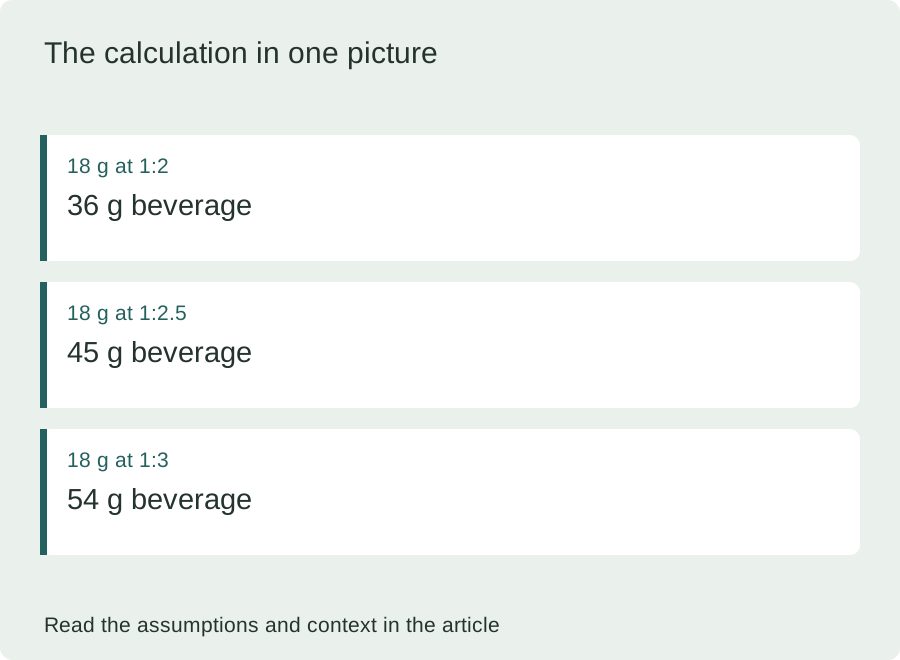
One chart explains espresso dose, yield and brew ratio
In the examples here, espresso ratio compares dry coffee dose with beverage mass in the cup.
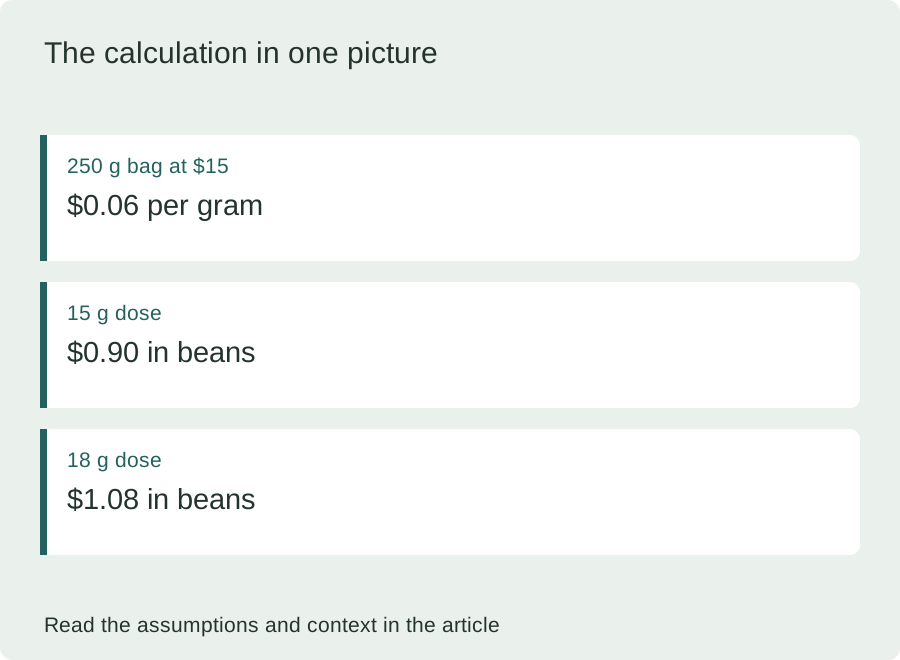
One chart calculates the coffee cost of a cup at home
The price of a bag becomes easier to compare when you connect it to dose.
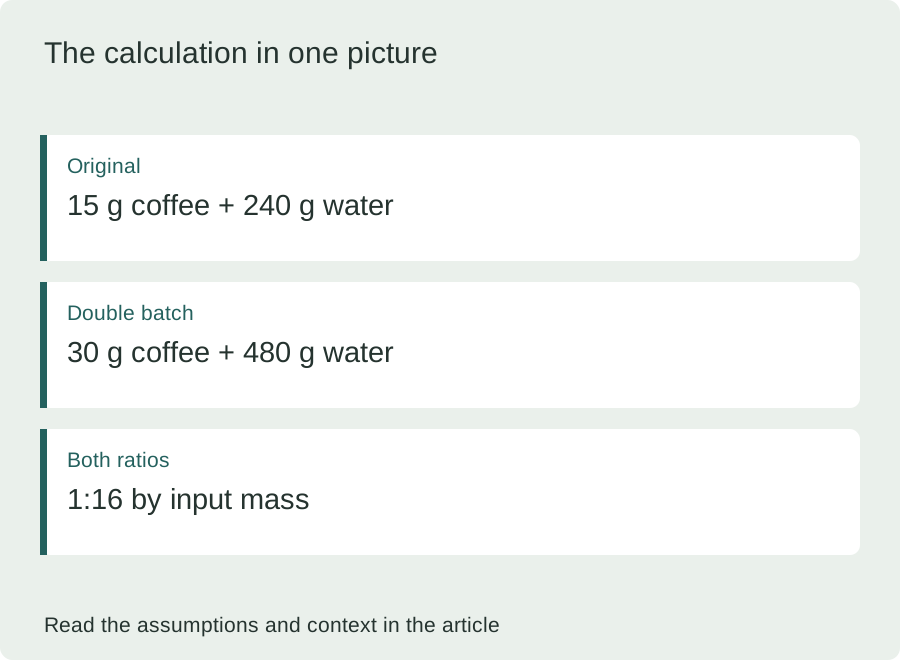
Can you double a coffee recipe? The math is easy; the brew may change
Doubling coffee and water preserves their ratio.
Perspectives
Why a small coffee ritual can make an ordinary morning feel different
The appeal may be the pause as much as the drink: a few familiar actions that mark a transition from one part of the day to another.
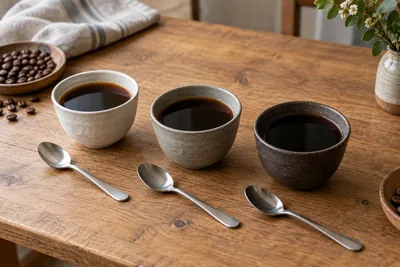
Why a simple cup of coffee can feel more special than a complicated one
A considered cup is not necessarily an elaborate cup.
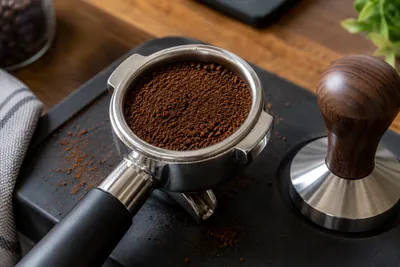
Why coffee gear is so appealing—and how to choose what earns its place
Equipment can offer tactile pleasure, curiosity and the promise of a new capability.
When is a coffee good enough to stop adjusting?
An enjoyable cup does not need to remain an unfinished project.
Technical guides
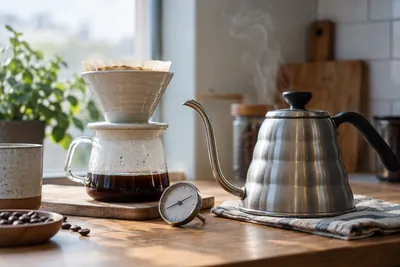
Coffee brewing temperature: a controlled comparison
A kettle setting does not equal the temperature throughout a coffee bed.
Bypass coffee math: change strength after brewing
If 200 g of coffee measures 1.50% TDS, it contains an estimated 3 g of dissolved solids.
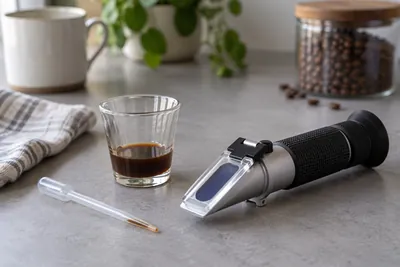
Coffee extraction yield and TDS explained
For a simple beverage-based calculation, 250 g of coffee at 1.20% TDS contains 3 g of dissolved coffee.
Espresso flow, fines and channeling
A fast shot can come from a coarse grind, poor distribution, an unsuitable dose or several factors together.
Coffee water concentrates: labels, units and limits
The hydration state of a salt changes how much mineral a gram provides.
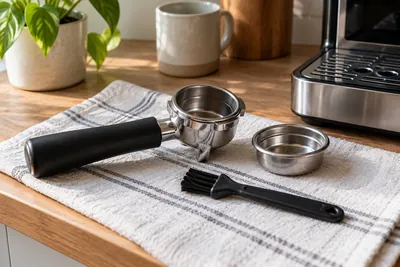
Espresso scale: water tests and descaling decisions
A kettle deposit is a clue that minerals can precipitate, not a complete diagnosis of the inside of an espresso machine.
Flat and conical burrs: what comparisons can tell you
Burr geometry is only one part of a grinder.

Coffee filters: flow, paper taste and texture
A new paper can alter drawdown even when grind and pouring stay the same.
Coffee refractometer calibration and sampling
A precise display cannot compensate for an unrepresentative sample.
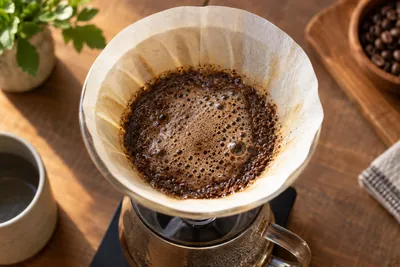
Coffee degassing, resting and bloom behavior
A vigorous bloom shows gas release, but it is not a freshness score that works across every roast and processing method.
Sour, bitter or dry? Coffee tasting with context
Sourness, bitterness and a drying sensation can appear together in one cup.
Coffee water: hardness vs alkalinity
A water report can list calcium, magnesium, hardness and alkalinity in different forms.