 Cup & Ratio
In pictures
One chart makes coffee-to-water ratios easy to calculate
For a filter recipe written as 1:16 by mass, each gram of dry coffee corresponds to 16 grams of brewing water.
Before you start
For a filter recipe written as 1:16 by mass, each gram of dry coffee corresponds to 16 grams of brewing water. Multiplication does the rest.
Name the two quantities
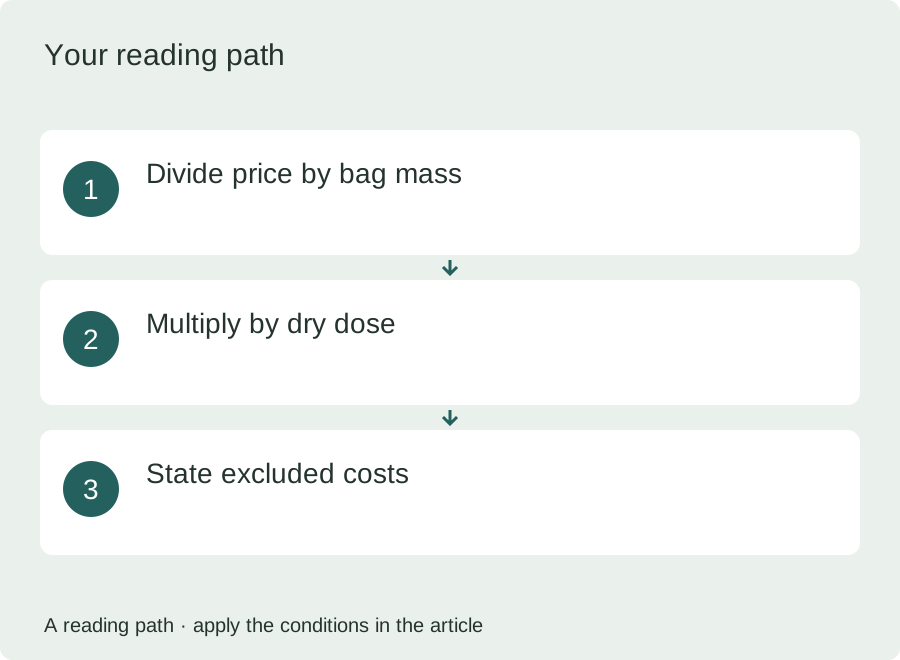
This article uses dry coffee mass and water poured into a filter brewer. It does not use final beverage mass. Some water remains with the grounds and equipment, so the drink collected is not automatically equal to the water poured. Write the meaning beside the ratio before calculating.
Work from coffee to water
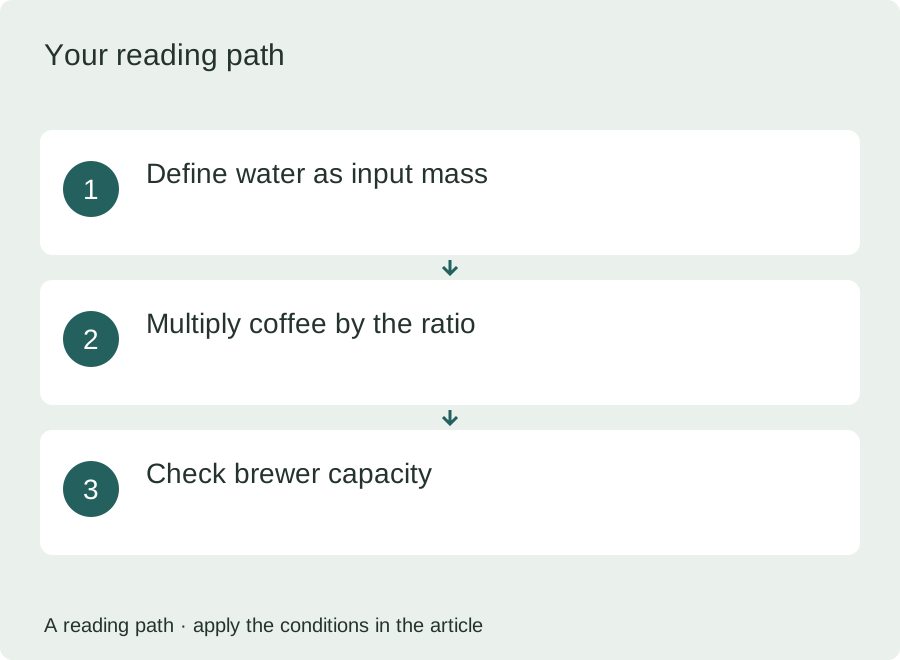
At 1:16, 15 g of coffee calls for 240 g of input water in the example: 15 multiplied by 16. A 20 g dose corresponds to 320 g, and a 30 g dose to 480 g. These are recipe quantities, not a claim that this ratio is ideal for every coffee or brewer.
Work backward from the desired input
If the recipe calls for 400 g of input water at 1:16, divide 400 by 16 to obtain 25 g of coffee. If your goal is a particular amount of finished beverage, account for the method’s retention rather than silently treating input water as cup yield.
Check three common arithmetic slips
First, 1:16 means sixteen units of the defined water quantity per unit of coffee; it does not mean sixteen units in total. Second, increasing 15 g of coffee to 20 g while keeping 240 g water changes the ratio to 1:12. Third, 240 g of input water is not a promise of 240 g in the cup. These mistakes are easy to avoid if you write coffee mass and input-water mass above the numbers before calculating. For another practice example, 22 g at 1:16 calls for 352 g of input water. The math is exact for those stated quantities.
Scaling the numbers does not scale the flow
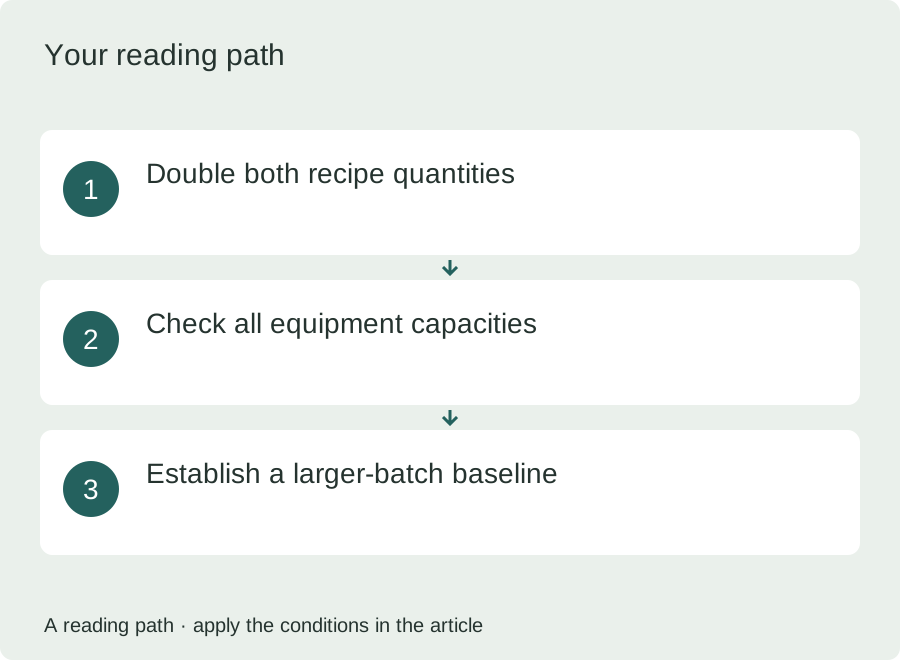
A bigger dose changes the bed in the brewer. Pouring, grind and time may need a new baseline even when the ratio remains identical. Check brewer capacity and the method’s guidance before doubling a recipe. Use the arithmetic to set quantities, then observe how the actual brew behaves.
Practical check: what to observe
Work through the numbers using the stated units. The examples are illustrative; changing an input or an assumption can change what the result means.
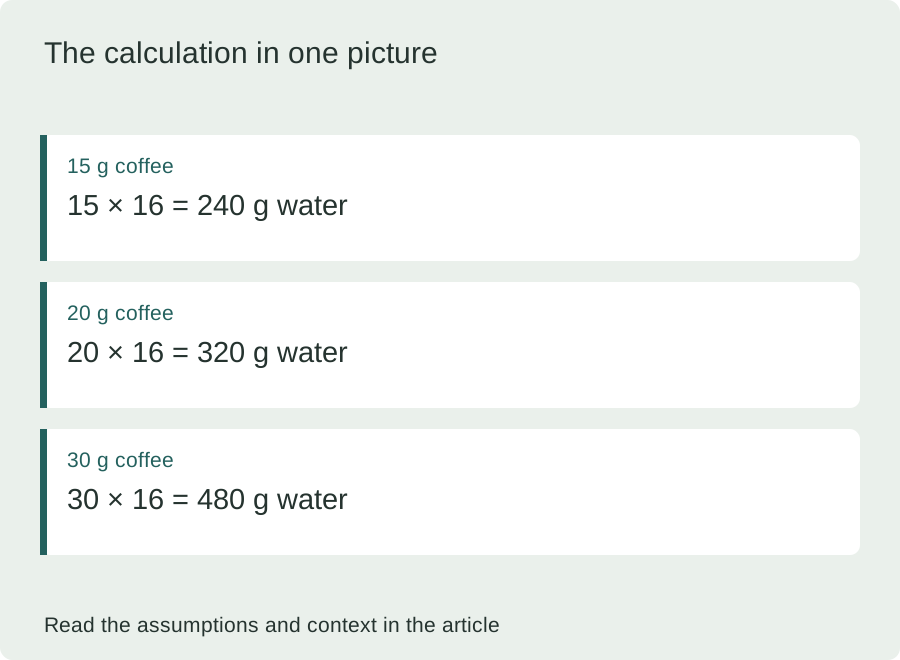
- Define water as input mass
- Multiply coffee by the ratio
- Check brewer capacity
Is 1:16 always better than 1:15?
No. A ratio is a starting recipe choice, not a quality ranking. Preference, coffee, brewer and technique can change which recipe you enjoy.
For more context, see the topic FAQ and glossary. A reference value or example should be read with its units, assumptions and product-specific conditions.
Watch with context
A Better 1 Cup V60 Technique
From James Hoffmann. An external demonstration to accompany the explanation. Follow the instructions for your own equipment or garment; a video is not evidence for every claim on this page.
Player requested. If the player remains blank or reports an error, use the direct YouTube link below.
Loading the player connects to YouTube and may share your IP address and browser information. YouTube may process data and use storage under its own policies. Video privacy details.
If playback is unavailable, watch “A Better 1 Cup V60 Technique” on YouTube.
Sources and scope
The numerical examples use the arithmetic and assumptions shown in the article. They are hypothetical illustrations, not measurements of a tested product. Read the editorial policy for sourcing, AI assistance and corrections.
Put the explanation to work
Continue reading
Spot a questionable claim or a calculation issue? Read our correction process and contact information. Examples and illustrations are educational; they do not establish product suitability or a laboratory result.