 Cup & Ratio
In pictures
Can you double a coffee recipe? The math is easy; the brew may change
Doubling coffee and water preserves their ratio.
Before you start
Doubling coffee and water preserves their ratio. It does not guarantee that a deeper bed and a larger pour will behave like the original brew.
Do the arithmetic explicitly
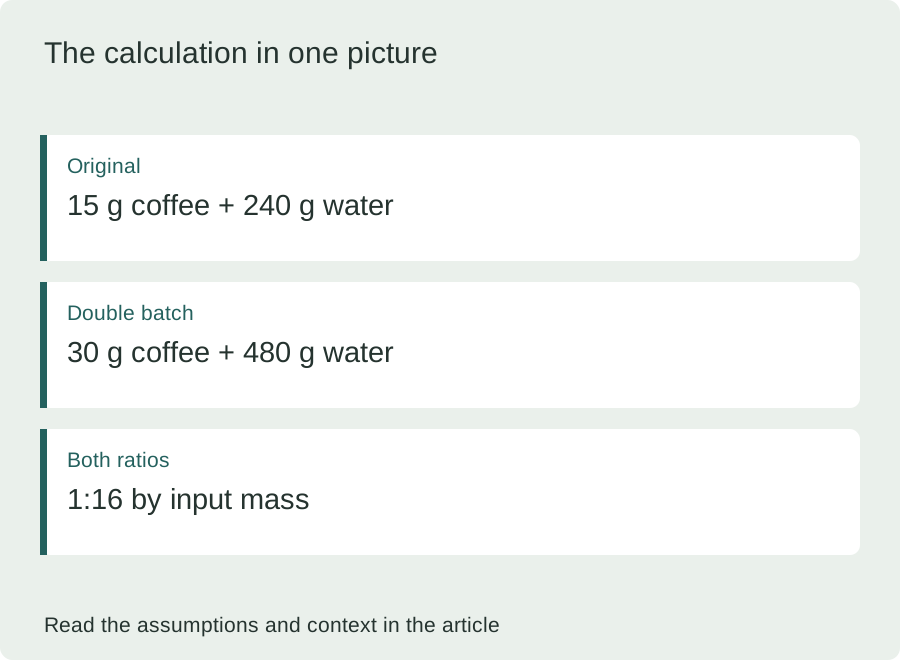
A filter recipe with 15 g coffee and 240 g input water has a 1:16 ratio. Doubling both gives 30 g and 480 g, still 1:16. Doubling only water gives 1:32, which is a different recipe. Label water as input rather than assuming these numbers equal the finished beverage.
Check the brewer before starting
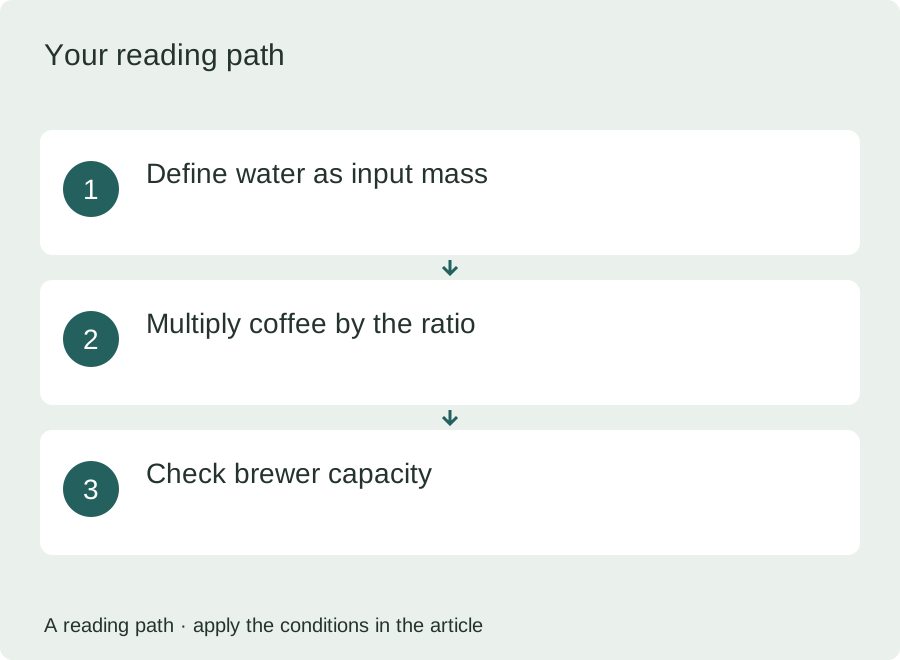
Confirm that the brewer, filter and collection vessel can accommodate the larger recipe as intended. Enough room in the carafe does not establish enough room in the brewing chamber. Avoid filling beyond equipment limits simply because the multiplication seems straightforward.
Expect a new baseline
A larger dose changes the bed and may change flow under the same pouring pattern. Follow a suitable larger-batch method or make a careful comparison. Do not force the original time by changing several other variables at once. Record what actually happens so the next adjustment has a clear starting point.
The receiving vessel is only one capacity
A server large enough to hold the intended drink may make a doubled recipe look feasible. Check the brewer and filter as well. The brewing chamber has its own practical limits, and a larger bed can require a suitable method rather than merely a longer version of the original pour. If your equipment instructions or established recipe do not support the larger batch, two smaller brews can be a clear alternative. The useful question is how to serve the desired amount reliably, not whether the mathematics can be made to justify using every available milliliter of space.
Consider brewing twice
Two separate familiar brews may be more predictable than pushing a small brewer into an unfamiliar batch size. The better choice depends on your equipment, timing and serving needs. Doubling is a practical option, not a test of whether your method is serious enough.
Practical check: what to observe
Work through the numbers using the stated units. The examples are illustrative; changing an input or an assumption can change what the result means.
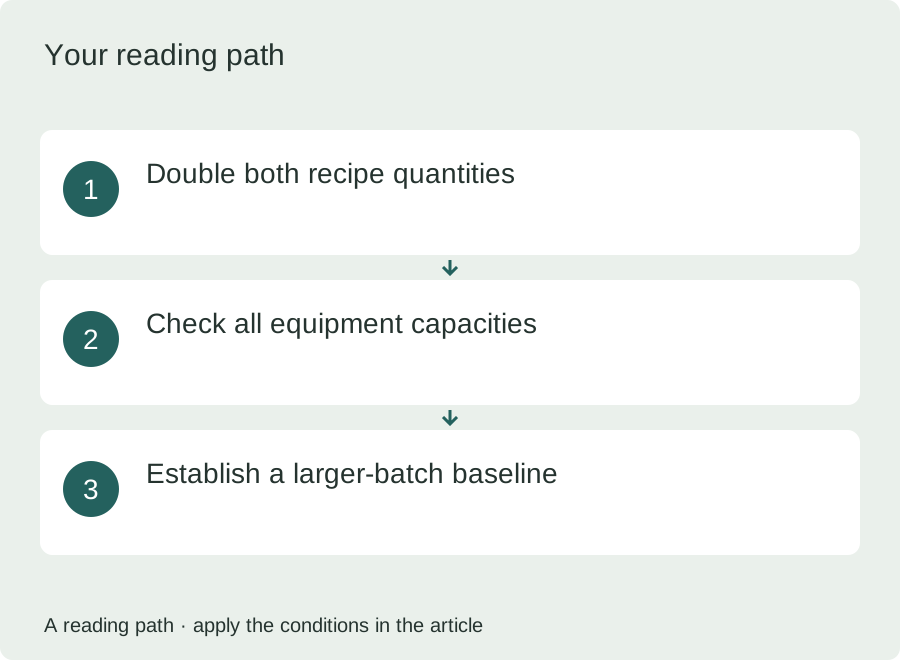
- Double both recipe quantities
- Check all equipment capacities
- Establish a larger-batch baseline
Should the larger brew take exactly twice as long?
There is no universal rule. Geometry, grind, pouring and equipment affect the process. Use a suitable method and observe the actual result.
For more context, see the topic FAQ and glossary. A reference value or example should be read with its units, assumptions and product-specific conditions.
Watch with context
The Ultimate V60 Technique
From James Hoffmann. An external demonstration to accompany the explanation. Follow the instructions for your own equipment or garment; a video is not evidence for every claim on this page.
Player requested. If the player remains blank or reports an error, use the direct YouTube link below.
Loading the player connects to YouTube and may share your IP address and browser information. YouTube may process data and use storage under its own policies. Video privacy details.
If playback is unavailable, watch “The Ultimate V60 Technique” on YouTube.
Sources and scope
The numerical examples use the arithmetic and assumptions shown in the article. They are hypothetical illustrations, not measurements of a tested product. Read the editorial policy for sourcing, AI assistance and corrections.
Put the explanation to work
Continue reading
Spot a questionable claim or a calculation issue? Read our correction process and contact information. Examples and illustrations are educational; they do not establish product suitability or a laboratory result.