 Cup & Ratio
Explainers
Coffee for beginners: the few ideas that make everything clearer
You do not need to memorize a flavor wheel before making a useful cup.
Before you start
You do not need to memorize a flavor wheel before making a useful cup. Start with the recipe, the brewing method and one observation you can act on.
Give the recipe clear units
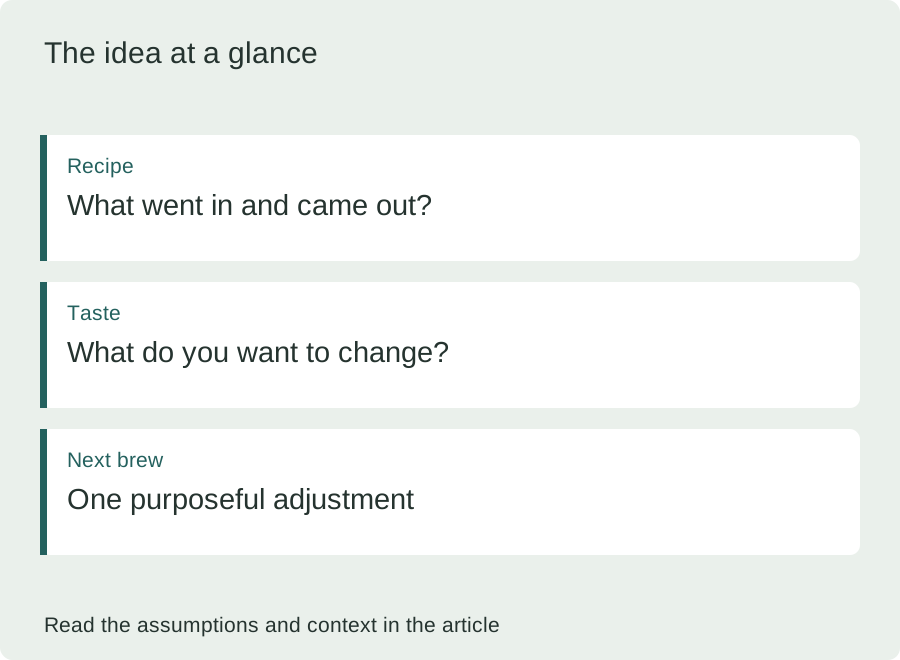
Record dry coffee mass and the relevant water or beverage mass. In a filter recipe, the water number commonly describes water poured into the brewer. An espresso ratio commonly compares dry dose with beverage collected. Label the quantities instead of assuming every 1:2 or 1:16 means the same operation.
Separate strength from extraction
Strength describes how concentrated the beverage is; extraction describes how much material was removed from the coffee. They are related but not identical. A cup can be intense without being balanced to your taste. Diluting a finished cup changes concentration without rerunning the brewing process.
Choose one repeatable method
Use a recipe from a reliable source that matches your brewer. Record coffee, water, grind setting and the main timing steps. You are building a baseline, not proving that this is the only correct method. A recipe that works on one grinder and brewer may need adjustment on another.
Build a baseline you can describe in one sentence
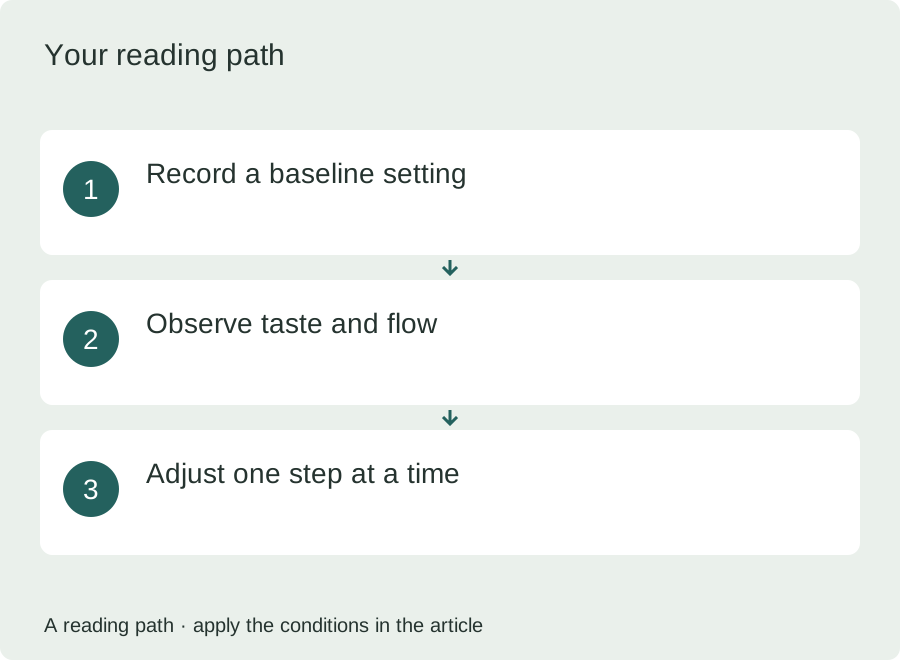
A useful note might identify a particular coffee, 15 g of dry dose, 240 g of input water, the brewer and the grinder setting. The numbers are only an example, but the sentence shows what another attempt needs to reproduce. Add a simple tasting observation and one intended change. If the next cup is better, repeat it before making another adjustment. This gives you a dependable reference point. Without one, every new recipe becomes a fresh beginning and it is difficult to distinguish a useful lesson from ordinary variation in how the coffee was prepared.
Make one purposeful adjustment
Write down what you want to change about the cup. Then adjust one relevant variable within the method’s practical limits. Keep the dose and other conditions stable enough to interpret the result. If you change everything because one cup disappointed you, the next cup provides less useful information.
Practical check: what to observe
Start with the situation described in this article, then follow the applicable product instructions. Keep a short note of what you observe so a later decision has context.
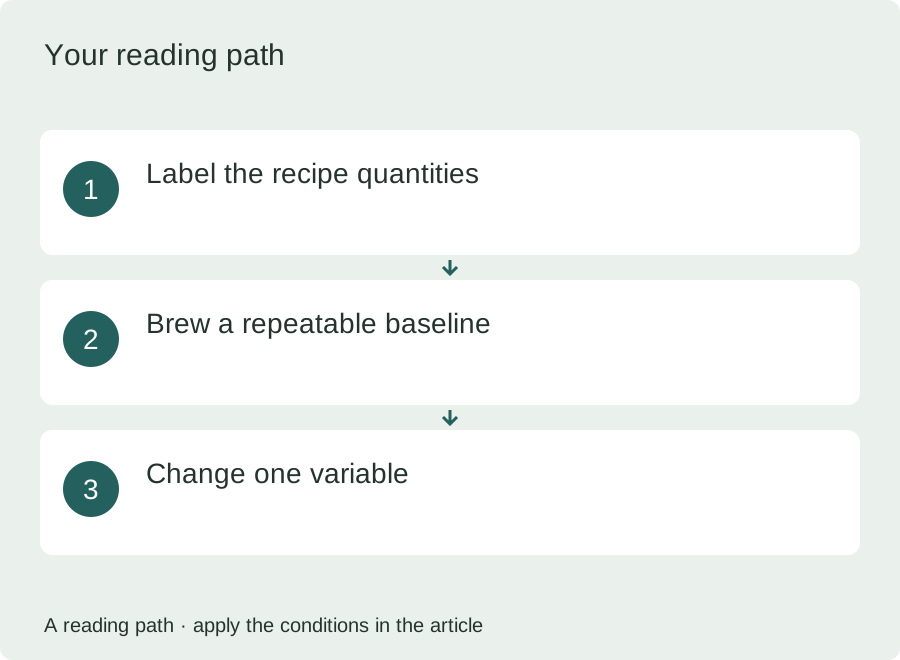
- Label the recipe quantities
- Brew a repeatable baseline
- Change one variable
Do I need a refractometer to begin?
No. Consistent measurements and clear tasting notes can support useful home adjustments. Instruments are optional tools, and their readings still require appropriate methods and interpretation.
For more context, see the topic FAQ and glossary. A reference value or example should be read with its units, assumptions and product-specific conditions.
Watch with context
The Ultimate V60 Technique
From James Hoffmann. An external demonstration to accompany the explanation. Follow the instructions for your own equipment or garment; a video is not evidence for every claim on this page.
Player requested. If the player remains blank or reports an error, use the direct YouTube link below.
Loading the player connects to YouTube and may share your IP address and browser information. YouTube may process data and use storage under its own policies. Video privacy details.
If playback is unavailable, watch “The Ultimate V60 Technique” on YouTube.
Sources and scope
The reading below provides context for the relevant care or brewing principles. The article’s scenarios and decision questions are original editorial explanations, not independent product tests. Read the editorial policy for sourcing, AI assistance and corrections.
Put the explanation to work
Continue reading
Spot a questionable claim or a calculation issue? Read our correction process and contact information. Examples and illustrations are educational; they do not establish product suitability or a laboratory result.