 Cup & Ratio
Explainers
Your V60 suddenly drains slowly: diagnose before changing everything
Separate a slow drawdown observation from its possible causes using a repeatable baseline, one-variable tests and taste notes.
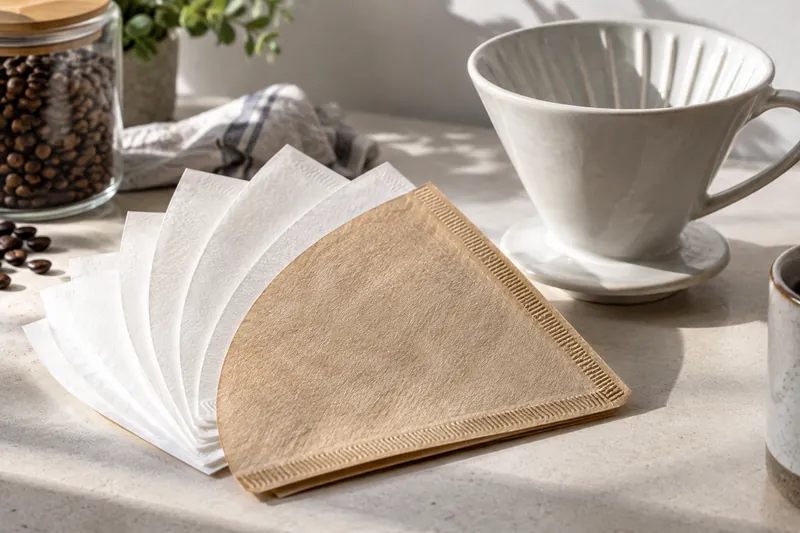
Before you start
An unexpectedly slow drawdown is an observation, not a complete diagnosis. Compare it with a known baseline and check what changed: coffee, dose, filter, grind or pouring. Record taste as well as elapsed time before deciding what to adjust next.
First confirm what “slow” means
Compare like with like. Did you start the timer at the same point, use the same water target and stop at the same endpoint? A new definition of “finished” can create a timing difference even before the recipe changes.
Write down the previous routine and the unusual brew side by side. If you have no baseline, describe the current result without calling it a failure just because it differs from a video.
Understand the fines explanation within its limits
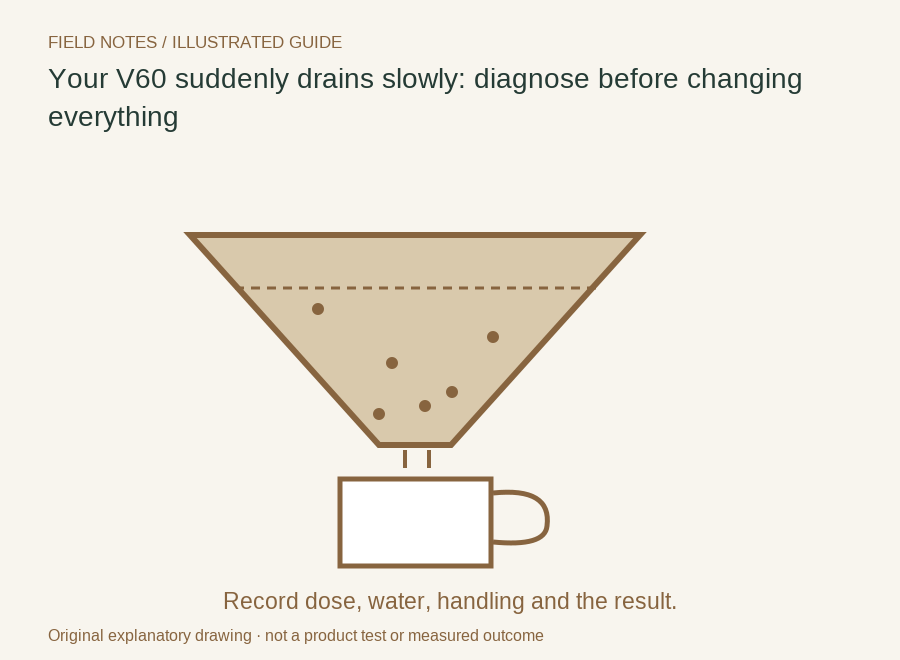
Jonathan Gagné’s article on fines migration discusses how small particles reaching a paper filter can contribute to clogging. It also explains limitations in transferring idealized granular experiments to wet coffee brewing.
That makes fines a mechanism worth considering, not proof of the cause of your particular cup. You cannot determine the complete particle distribution by looking at a dark slurry. The scientific discussion is useful because it suggests questions to investigate, not because it diagnoses every slow brew from a photograph.
Make a change inventory
| What changed recently? | A comparison to consider | What to record |
|---|---|---|
| Filter paper | Return to the known filter, if available | Filter identity and observed flow |
| Coffee dose | Compare the recorded dose with the previous recipe | Coffee and water mass |
| Grind setting | Try one documented adjustment | Setting, flow and taste |
| Pouring or swirling | Repeat a consistent handling sequence | Number and timing of interventions |
| Coffee itself | Establish a new baseline for that coffee | Coffee identity and recipe |
This is an editorial troubleshooting framework, not a ranking of causes by frequency. More than one variable may be involved.
Separate rescuing this cup from learning for next time
Hoffmann’s pour-over rescue video discusses adjustments when a brew is already going wrong. That is a different task from running a controlled comparison. A mid-brew intervention may help you finish a drink, but it changes the process you are trying to understand.
Mark such a brew as “intervened” in your notes. Avoid comparing it with an untouched baseline as if only the grinder setting had changed.
Choose one test you can actually repeat
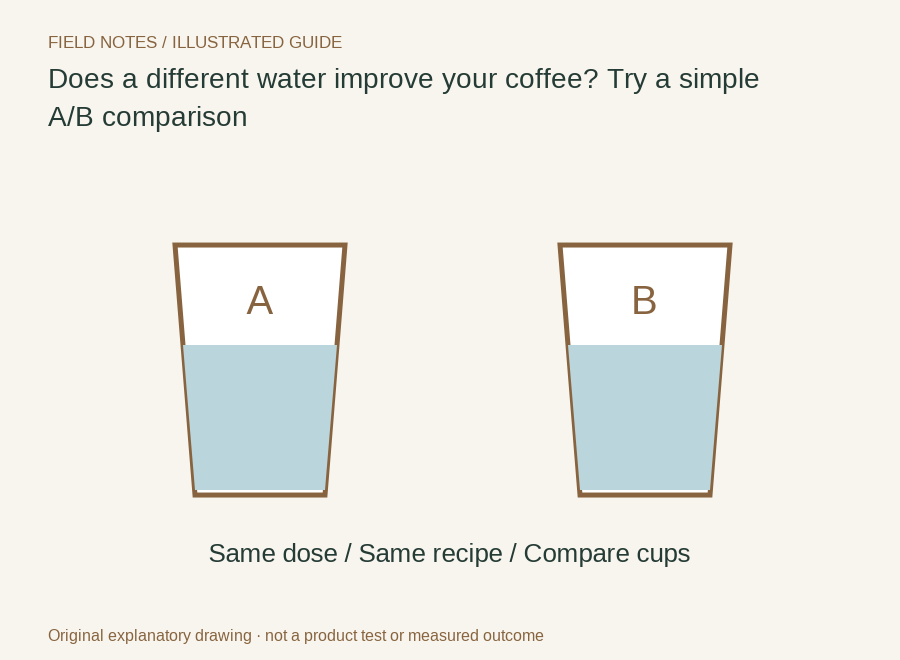
If you suspect the paper, compare paper while holding the rest of the recorded routine steady. If you suspect handling, define the pouring and agitation sequence before testing it. Repeating a comparison is more informative than treating a single changed cup as a universal finding.
You do not need an elaborate spreadsheet. Our brew journal can hold the setup, observation and next question. Leave unmeasured values blank rather than guessing an extraction percentage.
Let the cup contribute to the decision
Taste at a comfortable temperature and record a specific description. “Slower but preferred” and “slower and unpleasantly dry” lead to different decisions. Matching a time from another setup is not an end in itself.
If the result is repeatable and enjoyable, you may not need to shorten it. If it is inconsistent, work through the inventory with one clear question at a time.
Practical check: what to observe
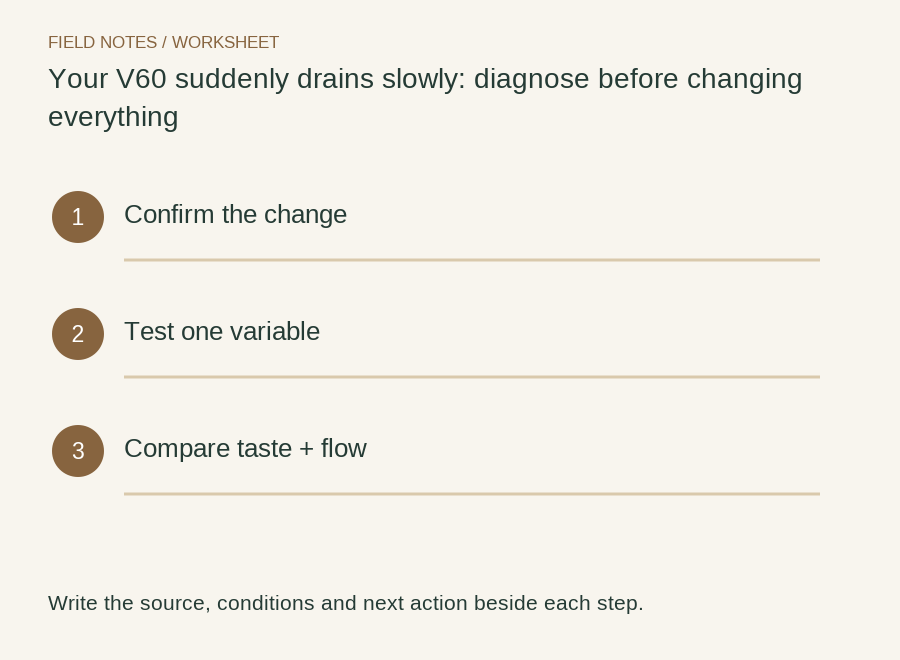
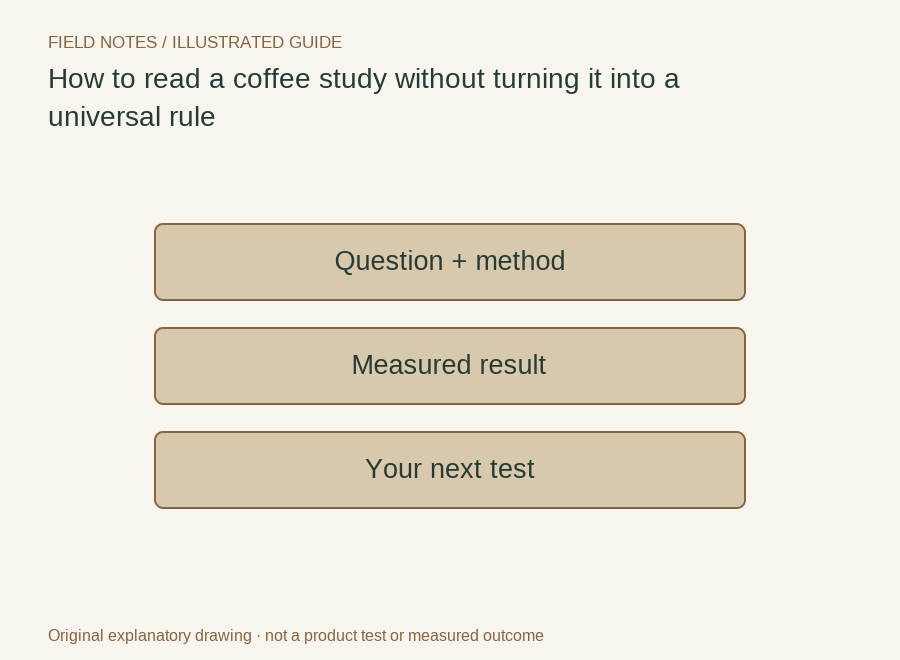
Repeat your baseline with a clearly defined timing endpoint. If you test a change, keep the other recorded inputs stable and describe both flow and taste. Mark an interrupted or improvised brew separately from a planned comparison.
- Confirm the change
- Test one variable
- Compare taste + flow
Does a long brew automatically mean the coffee is over-extracted?
No. Time alone does not measure extraction yield or establish your taste preference. A slow brew warrants investigation, but it is not a substitute for the other observations and measurements relevant to the question.
For more context, see the topic FAQ and glossary. A reference value or example should be read with its units, assumptions and product-specific conditions.
Watch with context
James Hoffmann: rescuing a pour-over brew
From James Hoffmann. An external demonstration to accompany the explanation. Follow the instructions for your own equipment or garment; a video is not evidence for every claim on this page.
Player requested. If the player remains blank or reports an error, use the direct YouTube link below.
Loading the player connects to YouTube and may share your IP address and browser information. YouTube may process data and use storage under its own policies. Video privacy details.
If playback is unavailable, watch “James Hoffmann: rescuing a pour-over brew” on YouTube.
Sources and scope
The reading below provides context for the relevant care or brewing principles. The article’s scenarios and decision questions are original editorial explanations, not independent product tests. Read the editorial policy for sourcing, AI assistance and corrections.
- Jonathan Gagné — The Physics of Fines Migration
Author’s discussion of particle migration, including limits of applying idealized experiments to wet coffee.
- James Hoffmann — Pour-over rescue demonstration
External demonstration about handling a brew that is going wrong; distinct from a controlled experiment.
- Jonathan Gagné — The Physics of Filter Coffee
Book page linked by the author; scope information rather than a complete review.
Put the explanation to work
Continue reading
Spot a questionable claim or a calculation issue? Read our correction process and contact information. Examples and illustrations are educational; they do not establish product suitability or a laboratory result.