 Cup & Ratio
Explainers
Why cleaning belongs in the coffee recipe conversation
A recipe assumes equipment that is ready to use.
Before you start
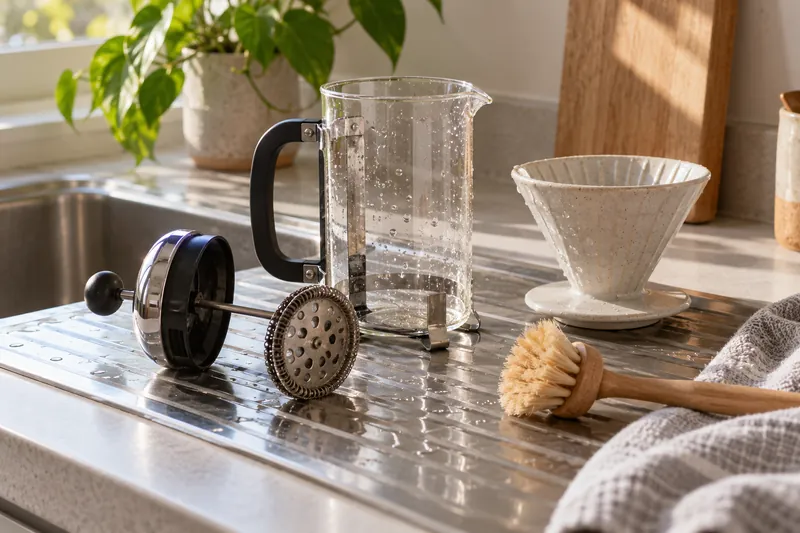
A recipe assumes equipment that is ready to use. Maintenance instructions deserve the same attention as dose and grind settings.
Separate daily cleaning from maintenance
Removing used grounds and cleaning accessible parts is not the same task as a manufacturer-specified maintenance procedure. Read the manual for the equipment you own. Do not substitute an internet recipe for instructions involving a machine’s internal pathways, materials or cleaning products.
Identify what touches the beverage
Look at the brewer, filter holder, server and any reusable parts according to their cleaning instructions. A cup comparison is harder to interpret if the equipment condition changes between brews. Keep the preparation routine consistent before attributing every flavor difference to water or beans.
Use compatible products and procedures
A product suitable for one material or machine may be unsuitable for another. Follow the equipment and cleaning-product directions, including rinsing and reassembly. Do not mix cleaning agents or assume a kitchen ingredient is universally approved because it appears in a popular tip.
Keep the maintenance record factual
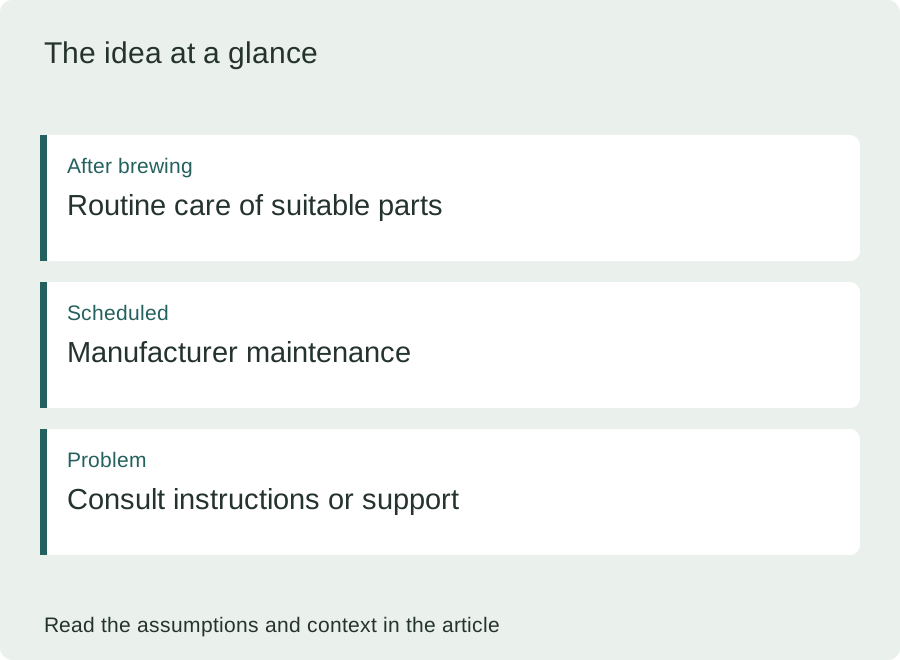
If a machine asks for scheduled maintenance, record the date, approved process and product actually used. Do not write serviced when the action was only wiping an accessible surface. Clear terminology matters when you later consult a manual or ask support about changed performance. Keep cleaning tools and products identifiable so another household member does not substitute an unrelated cleaner. This record does not establish that the machine is fault-free, but it makes the care history easier to understand. It also helps separate a brewing adjustment from an equipment question that needs manufacturer guidance.
Make the routine easy to finish
Place the appropriate brush or drying space where it supports the actual workflow. Keep a record of scheduled maintenance when the manufacturer calls for it. If performance changes persist, consult the manual or service support rather than repeatedly escalating an improvised cleaning process.
Practical check: what to observe
Start with the situation described in this article, then follow the applicable product instructions. Keep a short note of what you observe so a later decision has context.
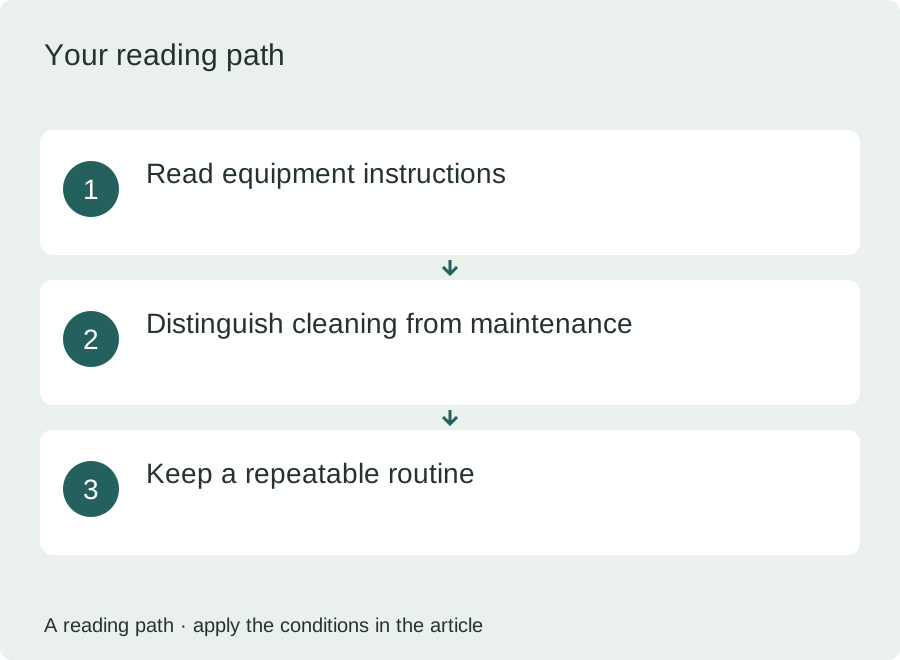
- Read equipment instructions
- Distinguish cleaning from maintenance
- Keep a repeatable routine
Are descaling and cleaning the same thing?
They can address different tasks and may require different procedures. Use the manufacturer’s terminology and approved process for your equipment instead of treating the words as interchangeable.
For more context, see the topic FAQ and glossary. A reference value or example should be read with its units, assumptions and product-specific conditions.
Sources and scope
The reading below provides context for the relevant care or brewing principles. The article’s scenarios and decision questions are original editorial explanations, not independent product tests. Read the editorial policy for sourcing, AI assistance and corrections.
Put the explanation to work
Continue reading
Spot a questionable claim or a calculation issue? Read our correction process and contact information. Examples and illustrations are educational; they do not establish product suitability or a laboratory result.