 Cup & Ratio
Explainers
Why someone else’s grinder setting rarely tells the whole story
A setting shared online is missing context unless it identifies the grinder, calibration, coffee and method.
Before you start
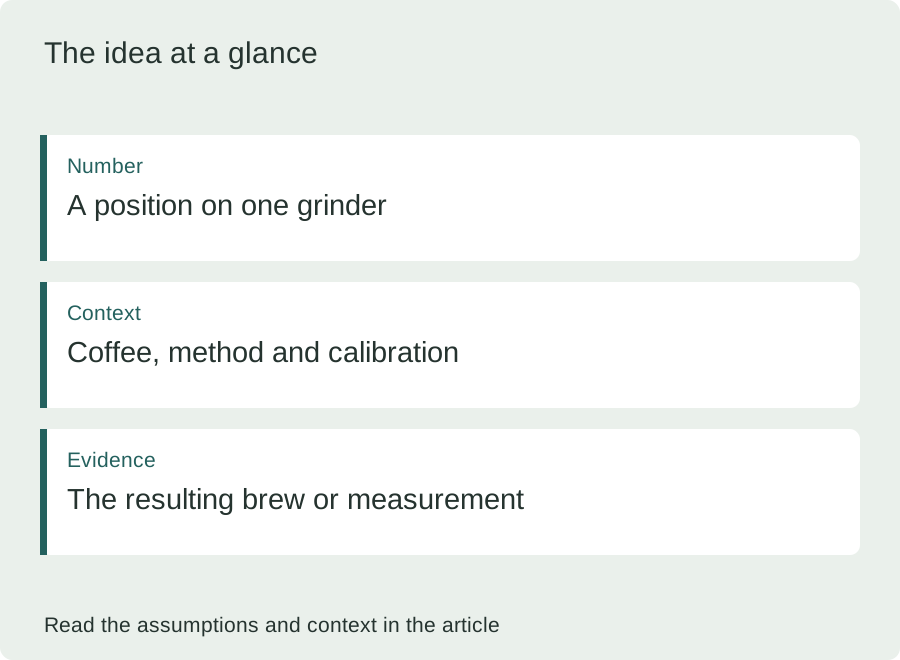
A setting shared online is missing context unless it identifies the grinder, calibration, coffee and method. Equal numbers do not establish equal grinds.
Understand what the number belongs to
A dial labels positions in a particular mechanism. It is not automatically a measurement in micrometers. Different models can use different scales, and individual units can have different reference points. Treat a setting as equipment-specific unless a measurement method is explicitly supplied.
Record the context that travels with it
When sharing a recipe, include grinder model, dose, brewer and relevant preparation details. Mention the calibration reference only if you actually know it. Do not convert a dial position into a particle size using an unsupported table merely to make the recipe look more precise.
Use another setting as a starting clue
A recommendation for your exact model can help choose an initial region. Follow the grinder instructions and evaluate the resulting brew. If the result differs, inspect the other recipe conditions before assuming the recommendation is wrong or that your machine is defective.
Keep a shared recipe interpretable
When someone reports setting 12, ask what the number refers to before trying to copy it. The model, reference point and recipe may be more useful than the number itself. If that context is unavailable, treat the recommendation as incomplete rather than converting it into an invented micron value. In your own notes, a successful setting can remain useful even without a particle measurement because it points back to your equipment and method. Precision in communication means stating what you know, not adding a unit that makes an uncertain comparison look scientific.
Build your own useful map
Keep a few successful settings tied to specific methods and coffees. Note the direction and size of adjustments that helped. This small record is more actionable than collecting many unexplained settings from strangers. Revisit the baseline after changes that may affect the equipment rather than treating the old number as permanent.
Practical check: what to observe
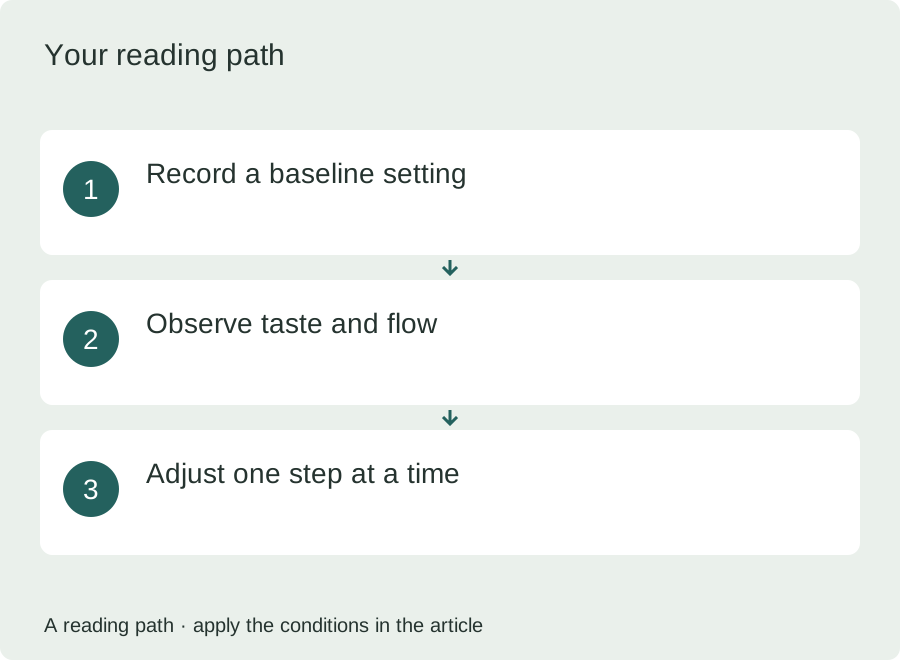
Start with the situation described in this article, then follow the applicable product instructions. Keep a short note of what you observe so a later decision has context.
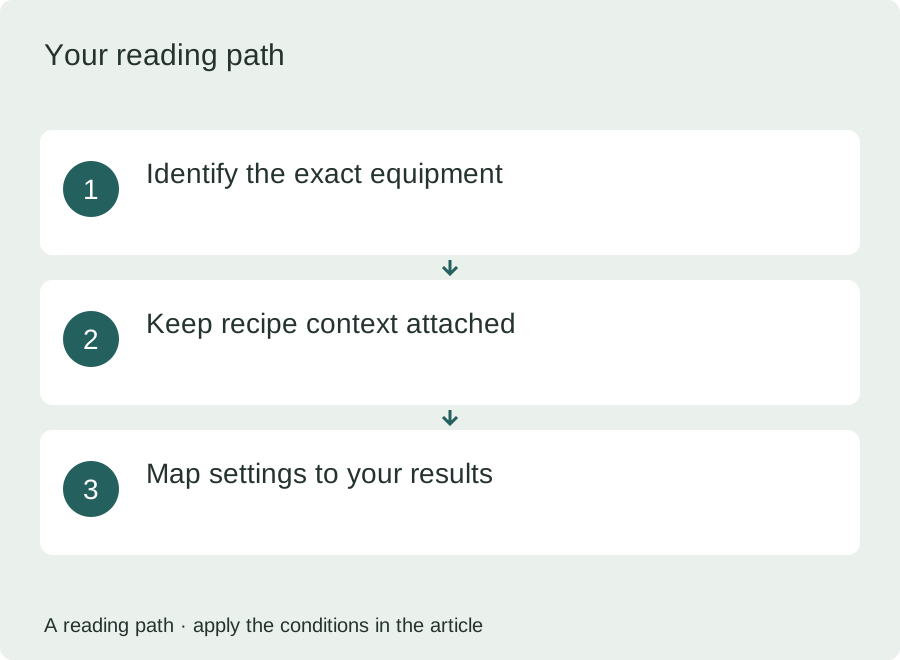
- Identify the exact equipment
- Keep recipe context attached
- Map settings to your results
Can a setting chart guarantee a particular particle size?
Not without a valid measurement basis for the equipment and conditions. A labeled estimate should not be presented as a calibrated particle-size distribution.
For more context, see the topic FAQ and glossary. A reference value or example should be read with its units, assumptions and product-specific conditions.
Sources and scope
The reading below provides context for the relevant care or brewing principles. The article’s scenarios and decision questions are original editorial explanations, not independent product tests. Read the editorial policy for sourcing, AI assistance and corrections.
Put the explanation to work
Continue reading
Spot a questionable claim or a calculation issue? Read our correction process and contact information. Examples and illustrations are educational; they do not establish product suitability or a laboratory result.