 Cup & Ratio
Explainers
The five-line coffee journal that makes your next cup easier
A useful brew note records enough to repeat or change the cup.

Before you start
A useful brew note records enough to repeat or change the cup. It does not need a scoring system or a long list of flavor adjectives.
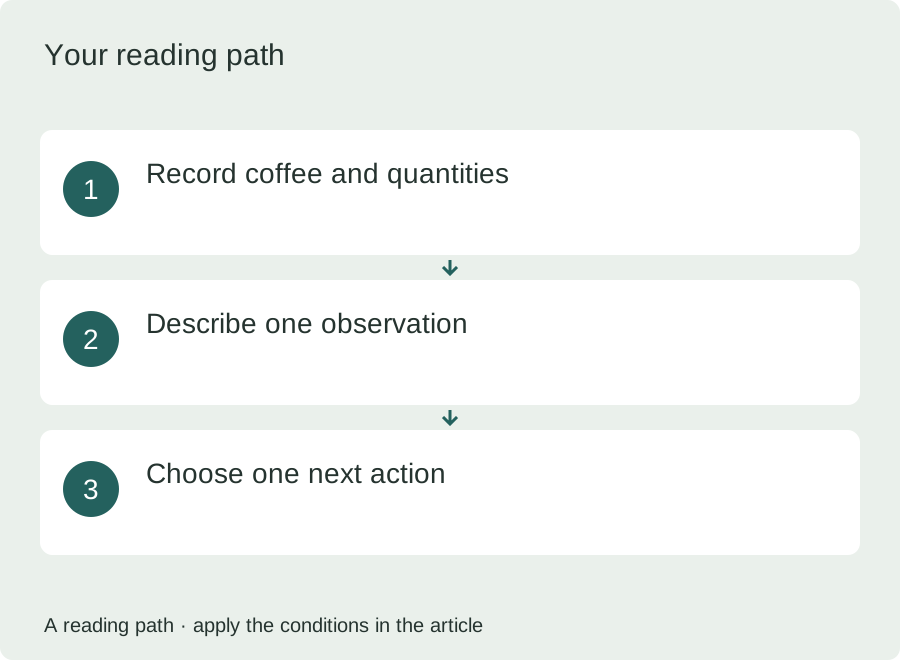
Line one: identify the coffee
Record the coffee and any package information that helps distinguish it from another bag. Use the same naming convention each time. You do not need to invent origin details that are missing from the label. The purpose is to know which coffee you used when you return to the note.
Lines two and three: capture the recipe
Write dry dose and the method’s relevant water or beverage mass, then grinder setting and brewer. Label the units. Add the main timing or pouring detail only when it helps reproduce your method. Too many fields can make a journal burdensome without making the brew more understandable.
Line four: describe one useful observation
Write a plain description such as enjoyable but too intense, or uneven flow compared with yesterday. Separate what you observed from what you think caused it. A guess can be worth recording, but label it as a guess so it does not become a false fact in the next entry.
An example of an honest entry
A useful entry could read: familiar coffee; the same filter recipe and measured quantities as yesterday; one grinder step changed; flow appeared slower; taste was more enjoyable; repeat before adjusting again. It does not need a numerical score or a claim about why the flavor changed. If something interrupted the process, record that too. An imperfect brew can still be useful when its circumstances are clear. The journal becomes misleading when it preserves only the planned recipe and leaves out what actually happened, such as a missed pour or an accidentally different dose.
Line five: choose the next change
State one intended adjustment and what you hope it changes. After the next brew, compare the result with that intention. If the cup was already enjoyable, repeat it instead of assuming improvement requires another change. The journal should preserve successes as readily as it investigates disappointments.
Practical check: what to observe
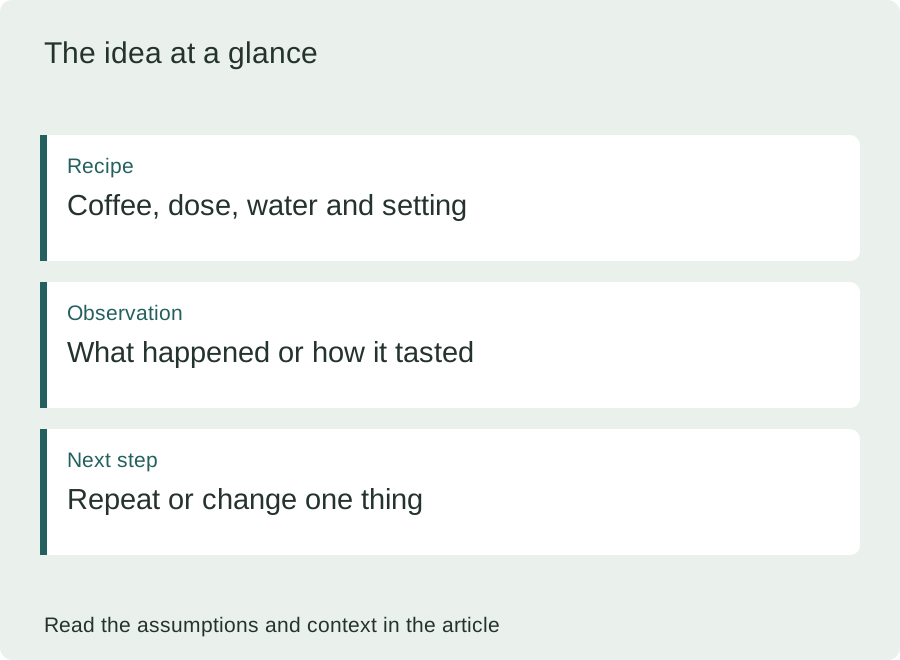
Start with the situation described in this article, then follow the applicable product instructions. Keep a short note of what you observe so a later decision has context.
- Record coffee and quantities
- Describe one observation
- Choose one next action
Do tasting notes need to sound professional?
No. Words that help you recognize your own experience are more useful than borrowed descriptions you cannot act on. Be specific enough to compare two cups.
For more context, see the topic FAQ and glossary. A reference value or example should be read with its units, assumptions and product-specific conditions.
Sources and scope
The reading below provides context for the relevant care or brewing principles. The article’s scenarios and decision questions are original editorial explanations, not independent product tests. Read the editorial policy for sourcing, AI assistance and corrections.
Put the explanation to work
Continue reading
Spot a questionable claim or a calculation issue? Read our correction process and contact information. Examples and illustrations are educational; they do not establish product suitability or a laboratory result.