 Cup & Ratio
Explainers
Why a coffee scale can matter more than another accessory
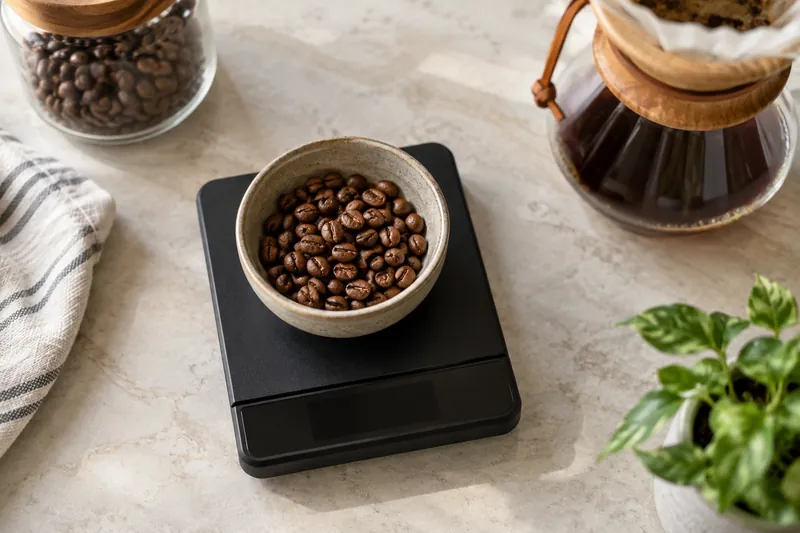
A scale makes the quantities in a recipe visible.
Before you start
A scale makes the quantities in a recipe visible. Its value is repeatability, not the suggestion that every cup needs laboratory precision.
Measure the variable you intend to control
A scoop measures a volume, while a mass-based recipe asks for grams. If the recipe uses mass, weigh the coffee and the specified water or beverage quantity. Do not silently switch between them. Consistent units make a result easier to understand and a recipe easier to share.
Choose the function before the features
Think about the brewer, the available space and the quantities you need to measure. Capacity, readable resolution and practical response matter in context. A scale suitable for a large pour-over setup may not fit beneath an espresso group. Follow the scale’s limits and keep it away from conditions it is not designed to withstand.
Learn the tare sequence
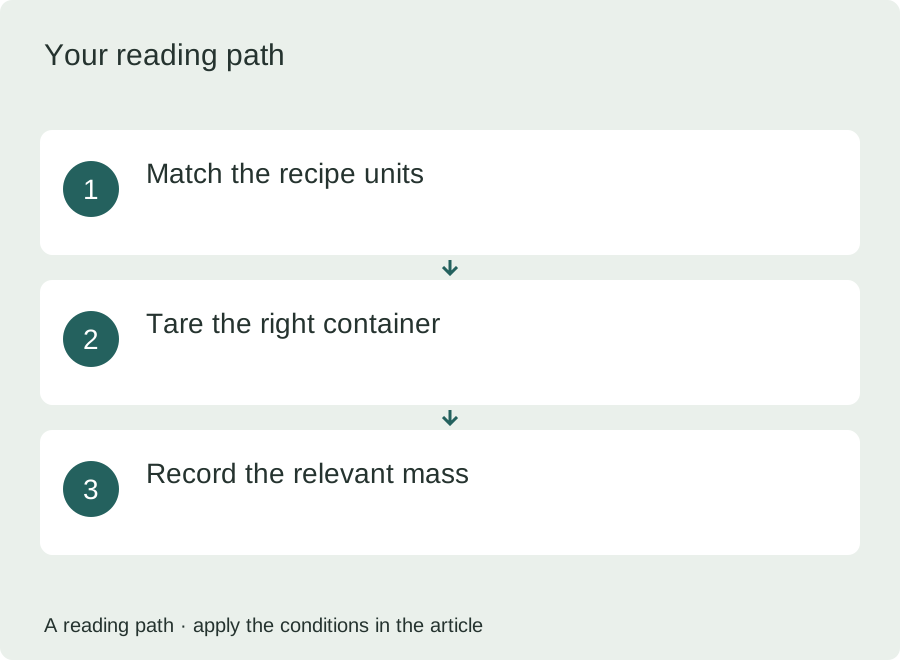
Tare removes the displayed weight of a container from the next measurement. Check which vessel or brewer is on the scale before pressing it. A clear sequence prevents confusing total setup weight with the water or beverage you intended to record. If a reading seems implausible, stop and check the setup.
A tare mistake can look like a recipe problem
Suppose a server is placed on the scale but not tared before the beverage measurement begins. The display then includes the server, so the recorded output is not the coffee mass alone. Before changing the recipe to explain an implausible result, check the measurement sequence. Write down which object was present at zero and which quantity was added afterward. This small habit is useful whenever you move between measuring beans, input water and collected beverage. A consistent zeroing sequence often provides more practical value than recording another decimal place without understanding what the display includes.
Use numbers to support attention
Once quantities are repeatable, tasting and technique become easier to compare. You can still make an enjoyable cup without weighing every occasion. The instrument is useful when it reduces guesswork; it becomes less useful when its display distracts you from an overflowing brewer or an uncomfortable routine.
Practical check: what to observe
Start with the situation described in this article, then follow the applicable product instructions. Keep a short note of what you observe so a later decision has context.
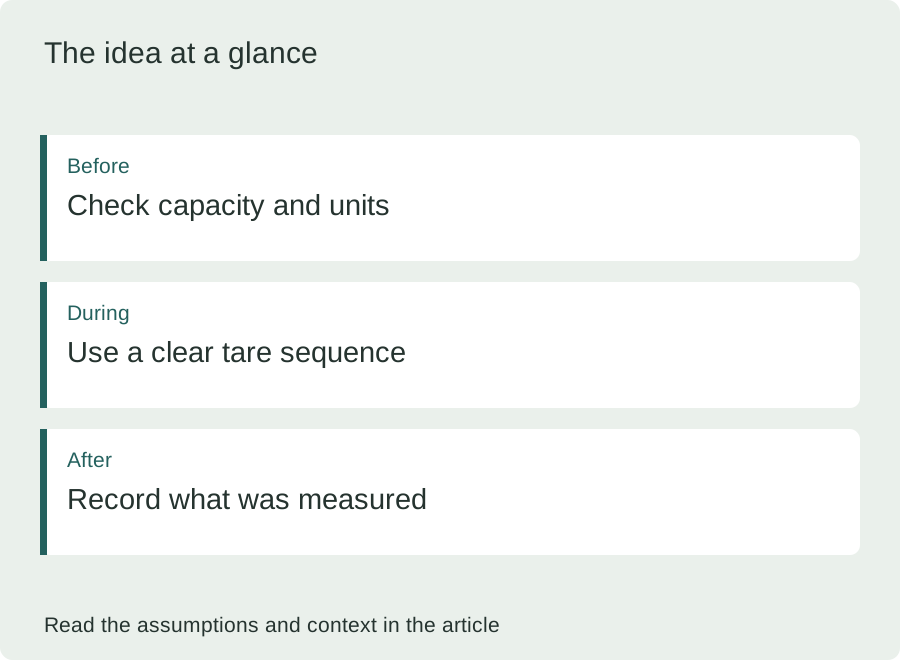
- Match the recipe units
- Tare the right container
- Record the relevant mass
Does a more expensive scale guarantee better coffee?
No. A suitable, usable instrument helps measurement. It does not choose the recipe, prepare the coffee or determine your taste preference.
For more context, see the topic FAQ and glossary. A reference value or example should be read with its units, assumptions and product-specific conditions.
Sources and scope
The reading below provides context for the relevant care or brewing principles. The article’s scenarios and decision questions are original editorial explanations, not independent product tests. Read the editorial policy for sourcing, AI assistance and corrections.
Put the explanation to work
Continue reading
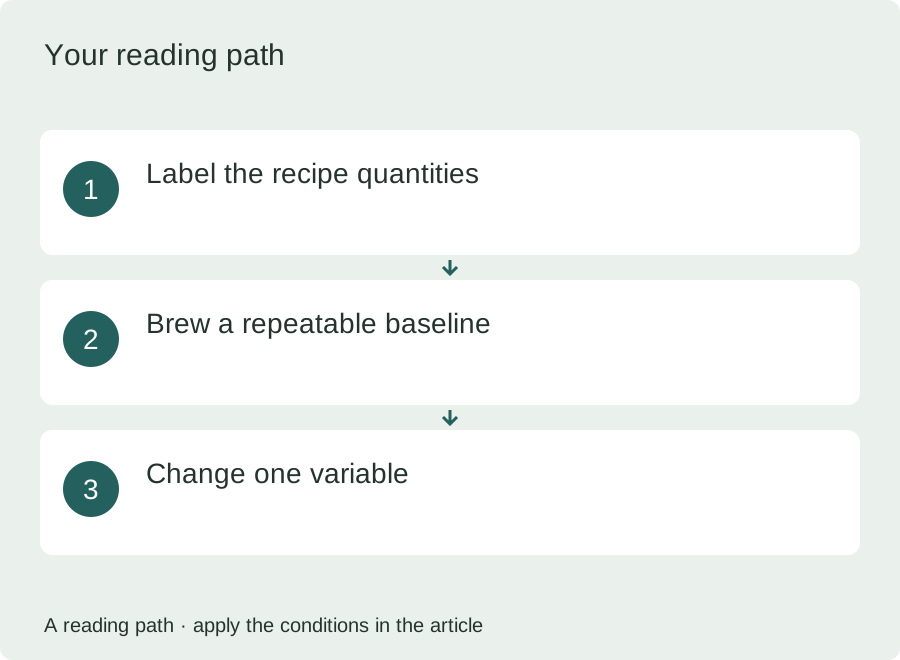
Spot a questionable claim or a calculation issue? Read our correction process and contact information. Examples and illustrations are educational; they do not establish product suitability or a laboratory result.